Direct factory supply pipelines delivering optimal brix, viscosity, and chemical stability requirements for Eastern European food manufacturing networks.
The Moscow metropolitan area, home to more than 20 million consumers, stands as the largest hub for food consumption, logistics, and processing in Eastern Europe. The demand for processed tomato products—ranging from high-viscosity tomato paste (28-30% & 36-38% Brix) to bulk diced tomatoes and specialized retail ketchup bases—is driven by three core pillars: industrial food manufacturing (ready-to-eat meals, snacks, and canning plants), the booming HoReCa sector, and private label development inside tier-one retail chains like Magnit, X5 Retail Group, and Auchan.
Due to recent shifts in global trade routes, Moscow-based procurers have refocused their supply chain strategies. Reliance on traditional Southern European tomato suppliers has transitioned toward high-capacity agricultural regions in China. Chinese agricultural manufacturing, specifically from regions with optimal microclimates, yields tomatoes with high sugar content, robust natural red coloration (Lycopene index > 50mg/100g), and very low Howard Mold Counts (HMC), perfectly matching Russian food safety regulations (TR CU 021/2011).
"Security of supply and compliance with Eastern European customs regulations are the key differentiators. Importers require direct customs transit from Chinese processing zones through to Moscow's dry ports, utilizing direct rail freight networks to optimize transit times."
*Estimates based on regional import tracking and industrial utilization indexes within the Central Federal District (Moscow & surrounding regions).
How we facilitate seamless import clearance and direct supply integration into Moscow's economic zone.
Entering the Moscow market requires compliance with strict food safety laws managed by Rospotrebnadzor (Russian Federal Service for Surveillance on Consumer Rights Protection and Human Wellbeing). Importation of plant-based ingredients, particularly tomato products in aseptic packaging, must satisfy the Customs Union Technical Regulations (TR CU):
Hebei Abiding Co., Ltd. has established localized compliance and logistics pipelines to streamline supply chains. Our processing facilities operate in accordance with FSSC 22000, ISO 9001, and HACCP. We provide complete documentation suites for Moscow customs clearance, including certificates of origin (Form A / EAEU-China FTA), phytosanitary certificates, test reports from independent laboratories (such as SGS), and technical datasheets mapping viscosity, Brix, and acidity levels.
| Parameters | Hot Break (HB) Tomato Paste | Cold Break (CB) Tomato Paste | Industrial Diced Tomatoes |
|---|---|---|---|
| Brix Range | 28-30% | 30-32% | 36-38% | 6-8% (Raw Juice/Concentrate Base) |
| Bostwick Viscosity | 4.0 - 6.0 cm / 30 sec (Low Flow) | 7.0 - 9.0 cm / 30 sec (High Flow) | N/A |
| Howard Mold Count (HMC) | < 40% positive fields | < 45% positive fields | < 30% positive fields |
| Lycopene Content | > 55 mg / 100g | > 65 mg / 100g | > 12 mg / 100g |
| Common Application | Ketchups, Thick Sauces, Meat Gravies | Reconstitution into Juices, Paste Retailing | Pizza Sauce, Pasta Sauces, Ready Meals |
Furthermore, to address geopolitical and financial shifts, we offer flexible trading terms, coordinating with international banking networks that support direct CNY-RUB (Yuan-Ruble) settlements. This minimizes currency volatility risks and ensures continuous supply contracts during peak production periods.
Hebei Abiding Co., Ltd. established in 2005 is a professional supplier of foods and food ingredients in China. Over the past two decades, we have constructed a comprehensive, vertically integrated supply chain encompassing raw agricultural cultivation, processing, packaging, quality control, and regional delivery systems.
As a certified EU & NOP organic products supplier, we have been ranked among the leading exporters of organic tomato paste in China for many years. We operate dedicated organic farms and modern processing facilities in regions characterized by intense sunlight, low humidity, and wide diurnal temperature variations (such as Xinjiang and Gansu). These environmental conditions yield tomatoes with exceptional natural Brix levels, deep red color values (A/B color ratio > 2.0), and minimal pest activity, which reduces the need for synthetic agricultural interventions.
This agricultural foundation allows us to maintain a reliable raw material pipeline, safeguarding our partners from market volatility and ensuring consistent chemical and sensory specifications across annual contracts.
Our raw materials are processed and packaged to meet the functional requirements of diverse food manufacturers.
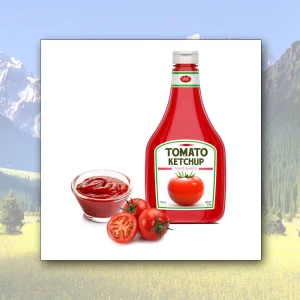
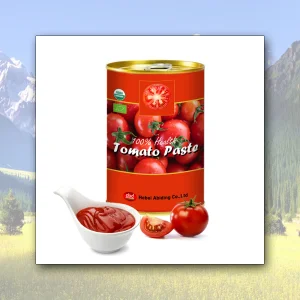
Our Hot Break Tomato Paste (28-30% Brix) provides natural viscosity and water-binding capacity, reducing the need for modified starches and stabilizers in clean-label ketchup production lines throughout the Moscow oblast.
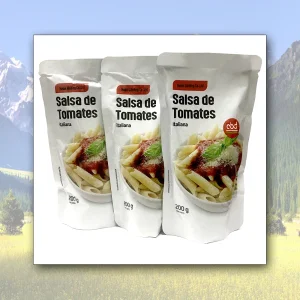
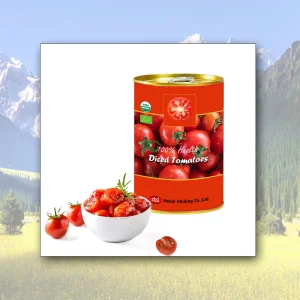
For Moscow food service distributors servicing pizzeria chains, we supply wholesale canned diced tomatoes and concentrated pizza bases. These products maintain structural integrity and sensory profiles during high-temperature baking cycles.
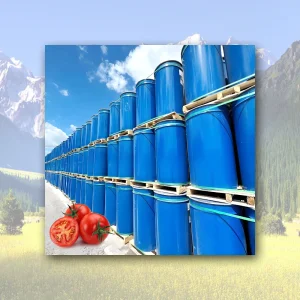
We supply bulk 220L aseptic drums directly to local packers who package tomato paste under private store brands, maintaining microbiological stability and consistent color for supermarket chains.
Consumers increasingly seek healthy, safe, and nutritious foods. Products characterized by high protein, high fiber, low calorie, Vegan, GMO-free, gluten-free, and clean labels are growing in popularity.
Hebei Abiding Co., Ltd. has developed specialized ingredient solutions to meet these requirements. In addition to our organic tomato derivatives, we offer organic plant powders, soy proteins, and dietary fibers. These ingredients serve as functional components in clean-label sauce formulations, allowing food brands to replace artificial texturizers and preservatives with natural alternatives.
The industrial food landscape is shifting toward raw material consolidation. Moscow's leading food brands are moving away from ad-hoc spot buying in favor of long-term contract manufacturing partnerships. Security of supply, consistency in color index (Lycopene concentration), and compliance with chemical residue limits (pesticides, heavy metals) have become critical metrics for corporate procurement.
Additionally, processing efficiency is changing packaging demands. While the HoReCa sector continues to rely on tinplate cans and plastic pouches, industrial processors are standardizing on 220L aseptic bag-in-drum and 1000L wooden bin formats. These packaging choices minimize physical handling, optimize container utilization, and reduce microbiological risks during long-distance shipping and storage.
Our processing lines in China utilize modern evaporation and pasteurization equipment. This technology preserves volatile flavor components and natural red pigmentation, helping manufacturers maintain taste and color quality during final formulation stages.
Direct answers regarding standards, logistics, and raw material specifications for Moscow and Eurasian buyers.
We offer two primary shipping routes to Moscow. The first is sea-rail intermodal transport via Vladivostok or St. Petersburg, which takes approximately 25-35 days. The second is direct rail freight departing from hubs in Xinjiang/Xi'an to Moscow (Kolyadiki/Vorsino terminal), which takes roughly 15-20 days. Temperature-controlled containers are available for winter shipments to prevent freezing.
Every shipment is accompanied by a full analysis report certifying compliance with TR CU 021/2011 (Safety) and TR CU 029/2012 (Additives). Our labels are printed to meet TR CU 022/2011 requirements, including full Russian-language ingredient declarations, nutritional values, storage instructions, and the EAC mark.
Yes. To accommodate current trade conditions, we accept direct settlement in Chinese Yuan (CNY) through financial institutions linked to the CIPS network. This avoids conversion processes and simplifies international banking procedures for Moscow importers.
Hot Break paste is heated to 85–90°C during processing, which deactivates natural enzymes and preserves pectin. This yields a highly viscous product suitable for ketchups and thick sauces. Cold Break paste is heated to 65–75°C, preserving more of the natural flavor and color, making it suitable for reconstitution into tomato juices.
Yes, Hebei Abiding Co., Ltd. is certified under EU organic regulations and the USDA National Organic Program (NOP). Our production lines are audited by independent bodies to ensure complete traceability from organic sowing to shipping container sealing.
We manage HMC levels through strict raw material selection and modern sorting equipment. Optical sorting systems remove damaged raw tomatoes, and water-flume transport keeps processing lines clean. Our typical HMC levels remain well below 40% positive fields, exceeding the standards required by domestic and international food manufacturers.
Additional raw materials and ingredients for food manufacturers in the Moscow region and wider EAEU market.
Speak directly with our technical sales division to organize documentation audits, request sample shipments, and coordinate logistic routes to Moscow.
 Abiding Food