 Abiding Food
1 / 4
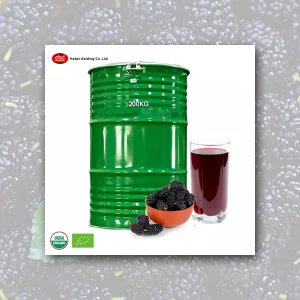
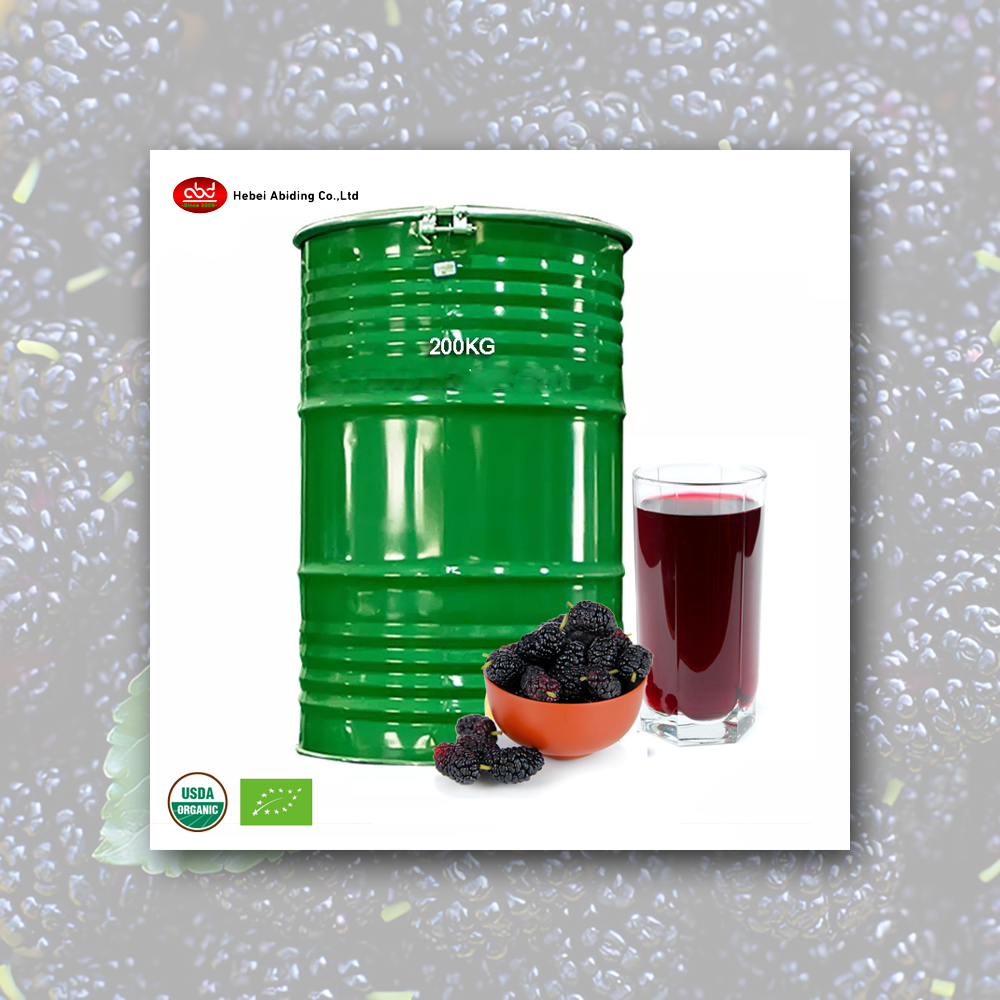
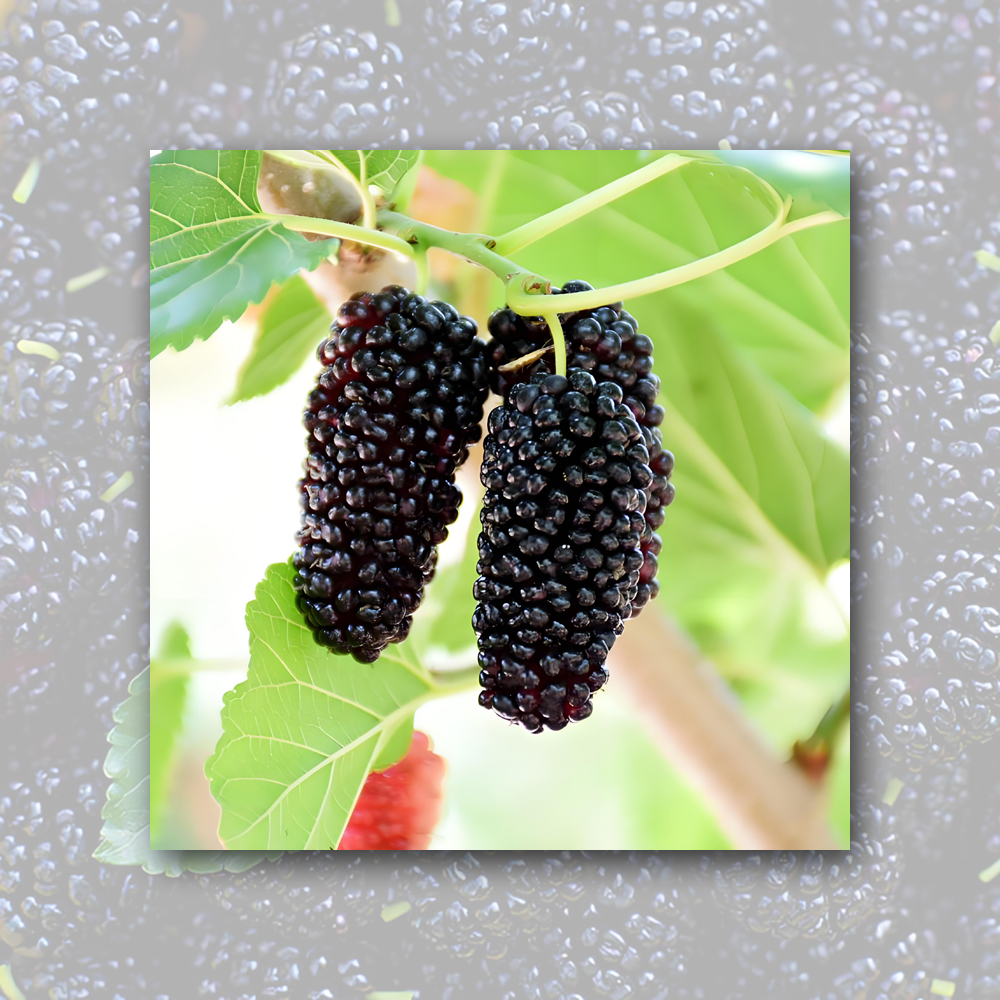
Mulberry concentrate is made from mulberries. After selection, washing, juicing and filtering, it is made by concentration technologies such as vacuum evaporation or reverse osmosis, which can retain the nutrition and flavor of mulberries.
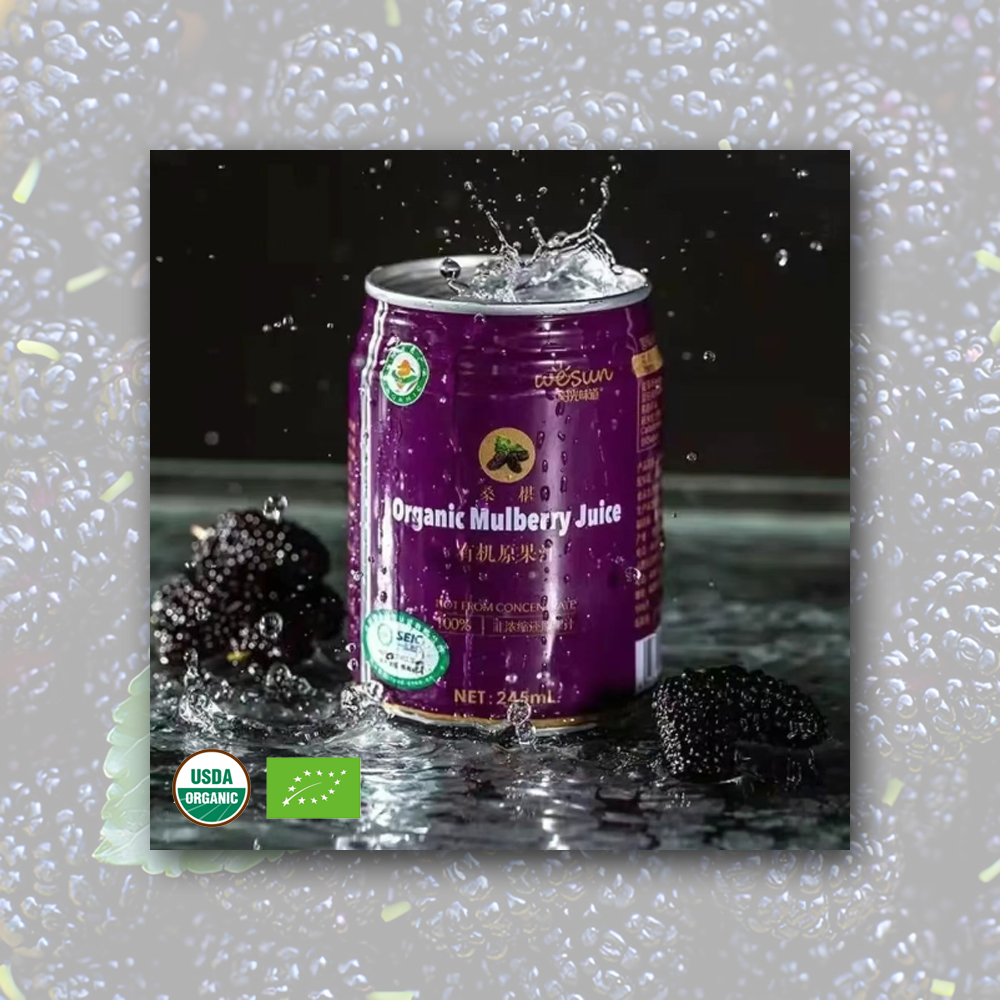
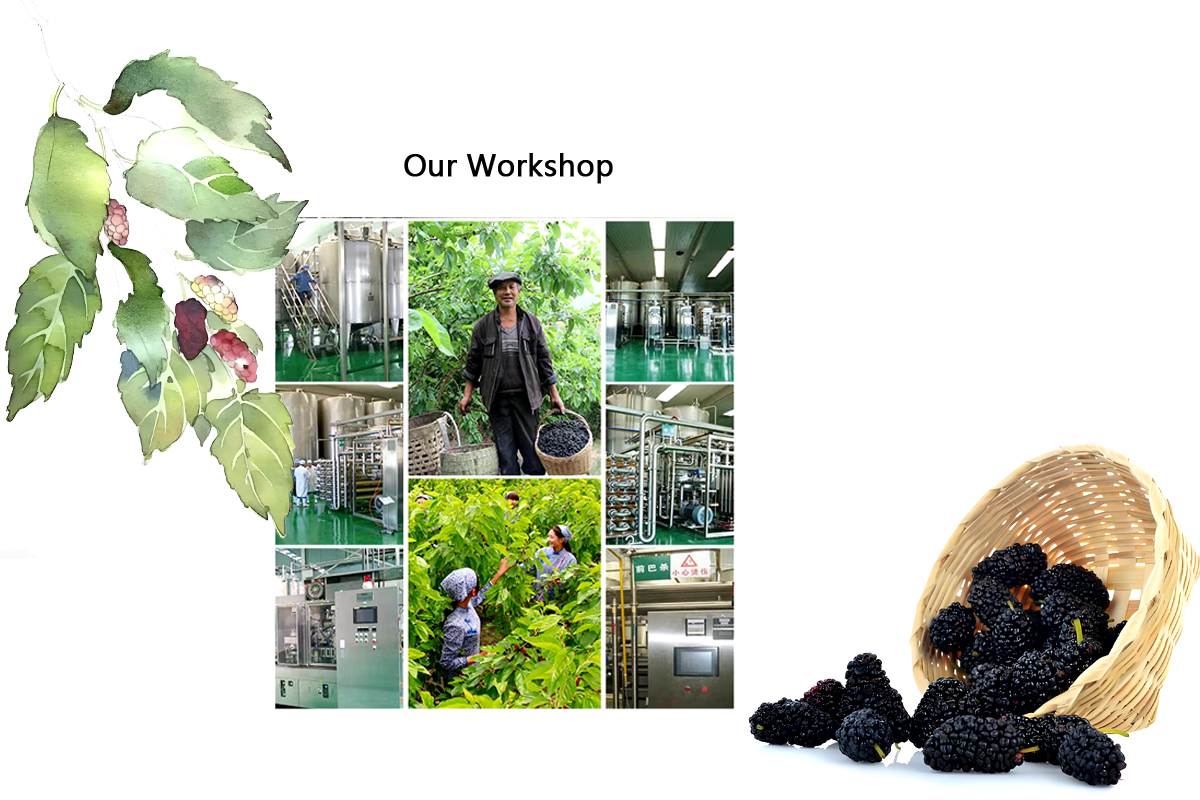
NFC mulberry juice maximally retains the original natural nutrition and taste of mulberries. It adopts advanced aseptic cold-filling equipment and technology. In a sterile environment, the juice is filled into sterile packaging materials and sealed, retaining the color, delicious taste and nutrition of mulberry juice.
Mulberries are rich in anthocyanins, vitamins, flavonoids and other substances. Eating them can improve the skin's antioxidant ability, thus playing a certain role in beautifying the skin.
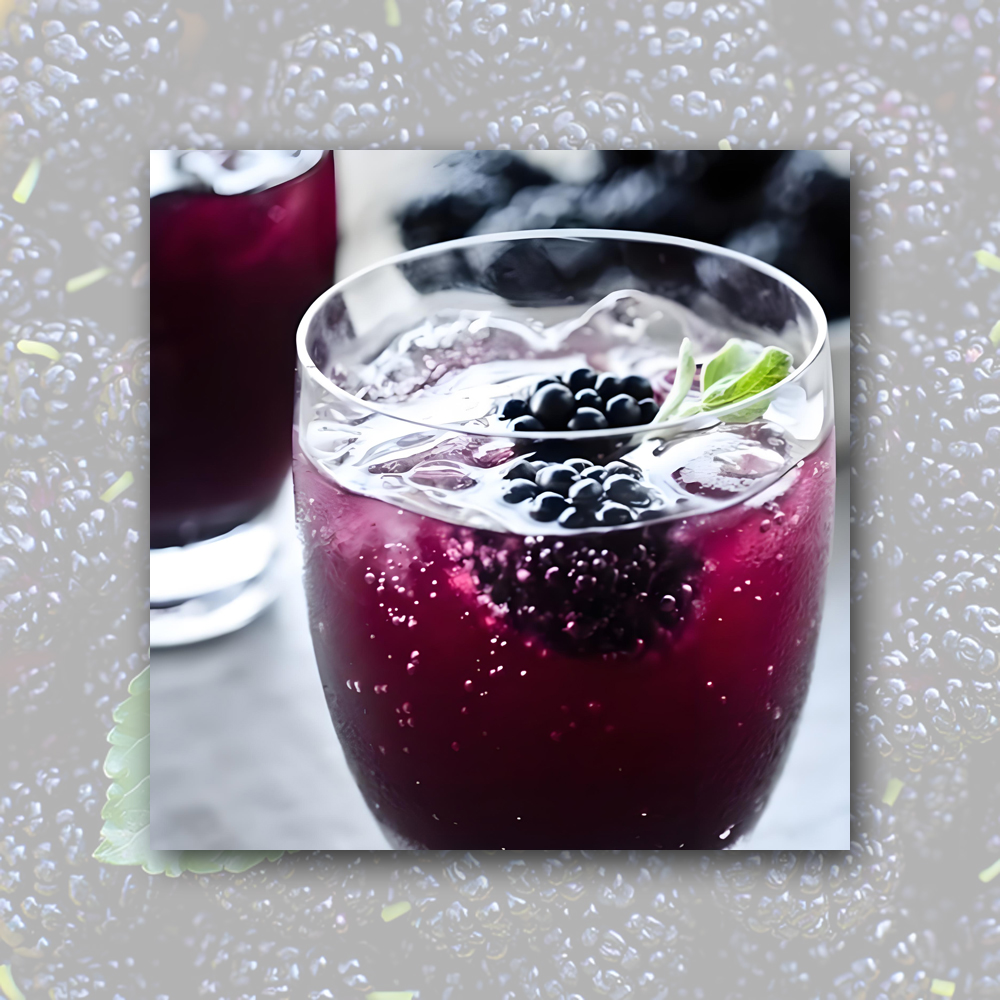
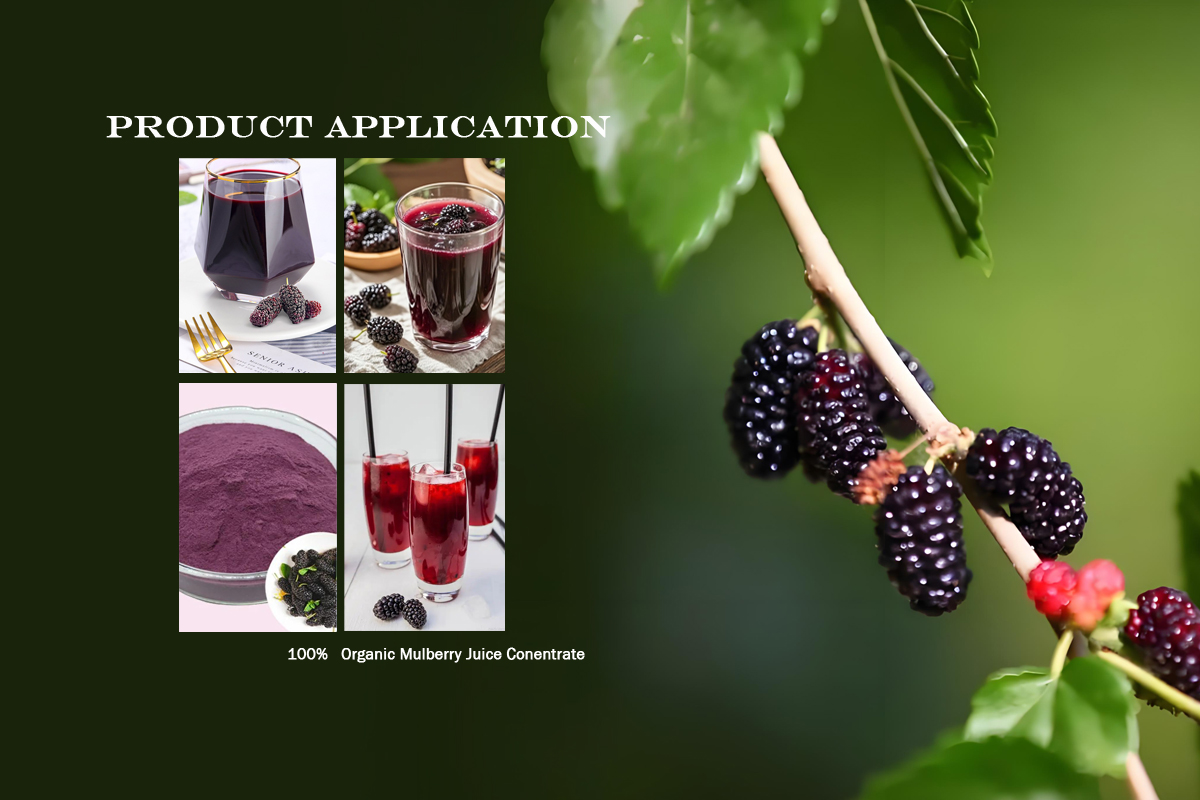
It is used in the production of fruit juice beverages, milk teas, fruit wines, jellies, jams, baked goods, etc., which can increase the flavor, color and nutritional value of products.
It is made into health-care products such as oral liquids, capsules and tablets, which are used to enhance immunity, resist oxidation, improve anemia, etc.
In the research and development of some drugs or functional foods, mulberry concentrate can be used as a raw material or additive, and is used for nourishing yin and blood, promoting the production of body fluids and moistening dryness, etc.
| NO. | ITEM | UNIT | STANDARD |
|---|---|---|---|
| 1 | SENSE REQUEST | / | DARK PURPLE OR PURPLE |
| 2 | SOLUBLE SOLIDS CONTENT | BRIX | 65+/-2 |
| 3 | TOTAL ACIDS(CITRIC ACID ) | % | >1.0 |
| 4 | PH | / | 3.8-4.4 |
| 5 | PECTIN | / | NEGATIVE |
| 6 | STARCH | / | NEGATIVE |
| 7 | TURBILITY | NTU | <20 |
| 8 | BACTERIA COUNT | CFU/ML | <100 |
| 9 | MOULD | CFU/ML | <20 |
| 10 | YEAST | CFU/ML | <20 |
| 11 | COLIFORM | CFU/ML | <10 |
| 12 | STORAGE TEMPERATURE | ℃ | -15 ~ -10 |
| 13 | SHELF LIFE | MONTH | 36 |
The shelf life of the mulberry concentrate is 36 months, and it must be stored at a temperature of -15 ~ -10 ℃ to preserve its quality.
NFC mulberry juice adopts advanced aseptic cold-filling equipment and technology. In a sterile environment, the juice is filled into sterile packaging materials and sealed, retaining the natural nutrition, original color, and delicious taste.
In the food industry, it is widely used to produce fruit juice beverages, milk teas, fruit wines, jellies, jams, and baked goods, enhancing both flavor and nutritional value.
Mulberries are rich in anthocyanins, vitamins, and flavonoids. Consuming them helps improve the skin's antioxidant capacity, which contributes to overall skin beauty and health.
In health-care, it is formulated into oral liquids, capsules, and tablets to boost immunity and resist oxidation. In pharmaceuticals, it acts as a raw material or additive for nourishing yin, blood, promoting fluid production, and relieving dryness.
The concentrate features soluble solids (Brix) of 65+/-2, total acids (citric acid) greater than 1.0%, a pH range of 3.8-4.4, with both pectin and starch tests returning negative results.