Analyzing the shift toward aseptic bulk packaging, raw material cultivation corridors, and the technological evolution of multi-effect vacuum evaporation.
The industrial food ingredient industry is experiencing a significant paradigm shift driven by demographic changes, logistics optimization, and rising demand for clean-label raw materials. At the heart of this global distribution network is the trade of bulk tomato paste in 220L steel drums. Historically viewed as a traditional agricultural commodity, modern commercial tomato paste processing has evolved into a high-technology manufacturing sector where quality control, cold-chain consistency, and energy efficiency determine market leadership.
Today, global procurement directors look beyond the basic transactional metrics of "cheap" sourcing. A holistic cost-of-ownership model prioritizes microbiological security, high-yield consistency, and carbon footprint mitigation. Regions with abundant sunshine, predictable seasonal rainfall, and rich soil—such as the Xinjiang and Inner Mongolia corridors in northern China—have consolidated their roles as global hubs for tomato paste production. These processing facilities rely on proximity to agricultural fields, ensuring that tomatoes are harvested, sorted, and routed to vacuum concentrators in less than 24 hours. This preservation of fresh-picked lycopene and soluble solids is critical for maintaining viscosity and natural flavor profiles without artificial additives.
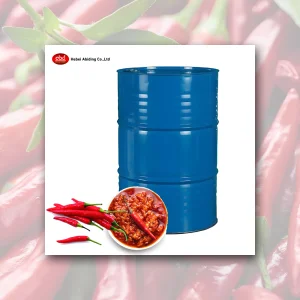
Utilizing high-barrier multilayer aseptic packaging in 220L steel drums to ensure 24-month ambient shelf life without preservatives.
Precise control of Hot Break (HB) and Cold Break (CB) parameters to meet specific viscosity targets for ketchup and sauces.
Integrating optical sorting technology and continuous wash cycles to guarantee a Howard Mould Count (HMC) below 40%.
A trusted name in international food ingredient supply chains since 2005, serving global food brands with certified organic excellence.

Hebei Abiding Co., Ltd., established in 2005, is a professional supplier of foods and food ingredients in China. We have built a robust supply chain mechanism including raw materials sourcing, production, sales, and after-sales service to ensure the supply of qualified, premium-grade products to our international clientele. Our core catalog encompasses high-value plant-based products, fruit and vegetable juice concentrates, purees, FD/AD (freeze-dried/air-dried) vegetables, plant proteins, and various clean-label food additives.
We are a certified EU & NOP organic products supplier with more than 20 years of experience in the organic food fields. Consequently, we have been ranked as a premier exporter of organic tomato paste in China for many years. With our own organic farms and advanced processing facilities located in major agricultural provinces, we ensure that every batch strictly complies with international organic standards.

As a certified EU & NOP organic products supplier, we operate our own organic farms and processing facilities in different provinces in China. Our integrated vertical controls from soil to export packaging guarantee premium traceability, food safety, and compliance with the most stringent global pesticide residue thresholds.
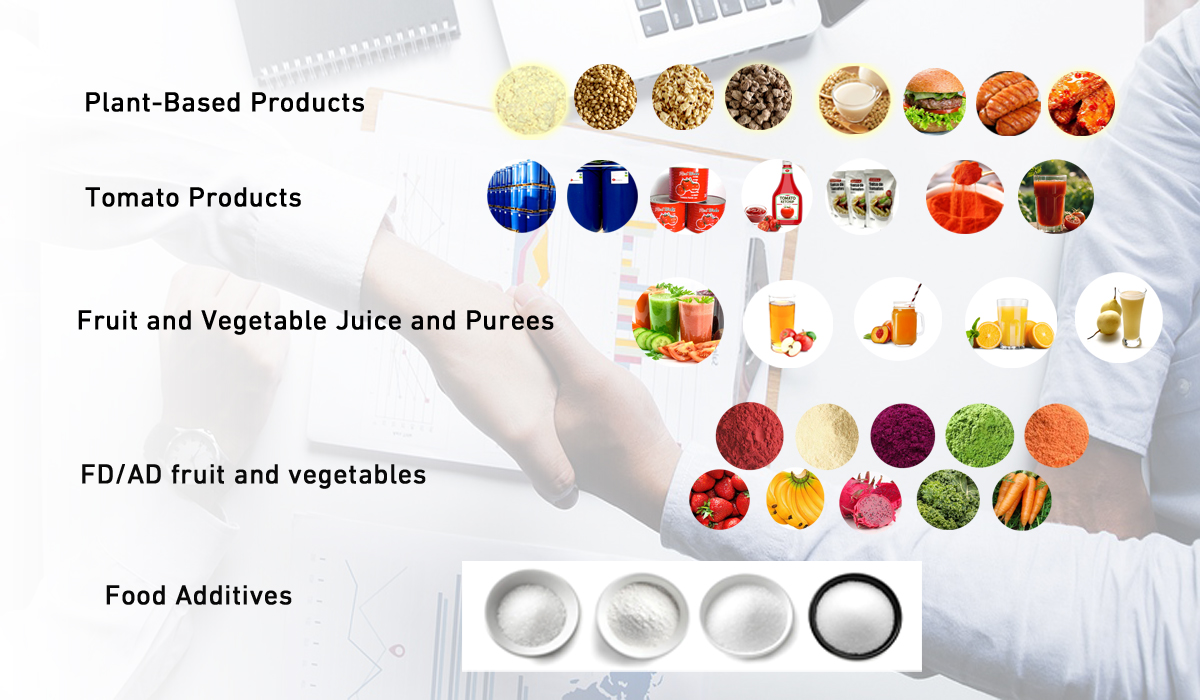
Modern consumers demand healthy, safe, and nutritious foods. High-protein, high-fiber, low-calorie, Vegan, GMO-free, gluten-free, and Keto-friendly foods are leading the market. Leveraging our rich experience in organic fields, we support food manufacturers with specialized, functional ingredients tailored for these rapidly growing consumer markets.
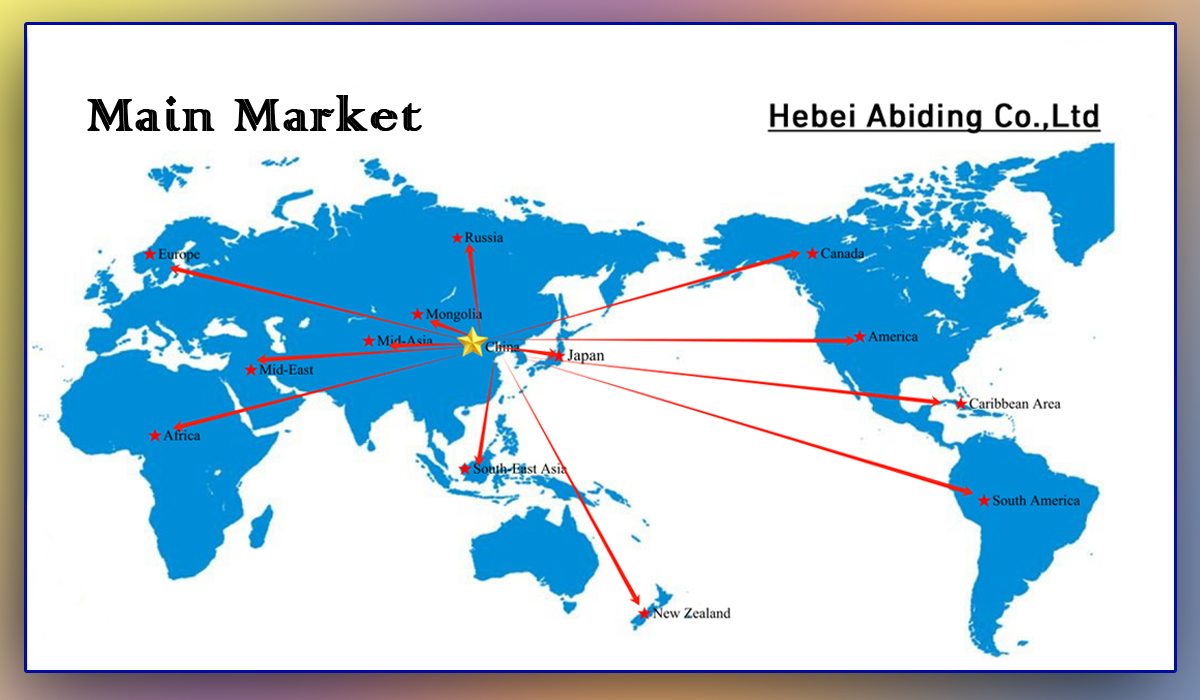
We have established long-term and stable business cooperation with customers worldwide. It is our honor to be a qualified supplier certified by Nestlé and other world-famous food corporations. We continue to deliver proactive client service, offering consistent quality, supply safety, and flexible logistical solutions.

Our purpose is to provide customers with healthy and safe products along with reliable, personal service. We survive by quality and develop through unique characteristics, forming a fast, efficient management team and a robust quality traceability system. Our core values remain: Character, Food, Conscience, and Care.
Optimizing total B2B procurement cost (TCO) without sacrificing quality through advanced physical parameters control.
When procurement managers search for "cheap" tomato paste in drums, the core business objective is to discover a manufacturer capable of producing cost-efficient products through scale economies and technical optimization rather than compromised quality. Raw material procurement is highly vulnerable to fluctuating energy tariffs, weather patterns, and agricultural land yields. True cost efficiency is achieved through high-yield farming methods, thermal recycling loops within evaporator systems, and automated aseptic lines that reduce scrap rates.
Industrial tomato paste is categorized by its concentration and heating profile during processing, defining its applicability across specific food sectors:
| Type / Grade | Brix Value | Bostwick Viscosity (cm / 30s) | Common Applications | Main Advantages |
|---|---|---|---|---|
| Cold Break (CB) | 28-30% / 36-38% | 7.0 - 9.0 (High Fluidity) | Tomato Juice, Reconstituted Pastes, Ketchup | Preserves natural tomato red color and fresh flavor notes. |
| Hot Break (HB) | 28-30% / 30-32% | 4.5 - 5.5 (High Viscosity) | Thick Pizza Sauces, Pasta Sauces, Gravies | Inactivates pectin-degrading enzymes, creating a stable, viscous matrix. |
| Organic Certified (NOP/EU) | 28-30% | Customized (HB or CB) | Clean Label & Premium Organic Brands | Zero pesticide residues, full traceability from certified farm plots. |
The processing phase begins with high-pressure water channels routing harvested raw tomatoes into industrial washers. Advanced sorting tables integrate laser and optical sorters to isolate green fruits, leaves, and defects. In the concentration stage, modern multi-effect evaporator systems operate under a vacuum to boil off water at lower temperatures (typically around 65°C to 75°C), safeguarding the heat-sensitive lycopene pigment and natural sugars from caramelization. The paste then undergoes flash sterilization via a tubular pasteurizer (108°C to 112°C) before being sealed inside pre-sterilized aseptic bags situated in 220-liter steel drums.
Meeting the rigorous food safety parameters of international buyers, food standards agencies, and high-tier brands.
For large-scale B2B food brands, sourcing cheap tomato paste in drums is governed by compliance. Operating under the rules of EU Organic Regulation (EC No. 834/2007) and the USDA National Organic Program (NOP) requires a comprehensive approach to agricultural input management. To ensure trace integrity, Hebei Abiding enforces strict protocols where organic fields are geographically isolated from conventional agricultural plots by buffer zones, preventing cross-drift of synthetic fertilizers or chemical pesticides.
Our processing centers execute critical control points (HACCP) under the supervision of qualified microbiologists. Regular chemical, physical, and sensory evaluations are conducted on every batch. Testing includes acidity levels (pH 4.0 - 4.4), Howard Mould Count (HMC), heavy metal limits (Lead, Tin, Arsenic), and specific gravity. Our certifications from global audit firms allow us to meet the demanding standards of top-tier food producers like Nestlé, assuring purchasers that our cost-effective pricing does not compromise safety, supply reliability, or social responsibility.
Independent laboratory validation certifying zero synthetic residues for our organic line, and compliance with CODEX standards for our conventional paste.
Fully certified under ISO 22000, HACCP, Halal, Kosher, EU Organic, and USDA Organic regulatory frameworks.
Long-term contract price stability, container optimization, and maritime logistics partnerships to prevent seasonal delivery delays.
Driving down B2B supply chain emissions and optimizing water footprint through precision farming and circular processing.
The tomato processing industry is increasingly incorporating environmental criteria into global procurement decisions. High-volume tomato paste factories are transitioning toward water-efficient recycling loops, returning condensate from evaporation stages back to primary washing channels. Precision drip irrigation systems integrated across agricultural fields prevent water run-off and maximize nutritional absorption, boosting yields per hectare and lowering the cost per metric ton of raw tomatoes.
Furthermore, energy recovery systems within steam boilers play a pivotal role in reducing processing costs. By capturing exhaust heat to warm incoming raw product streams, factories lower carbon dioxide emissions and gas consumption. Future developments focus on utilizing fully biodegradable aseptic inner bags inside recycled steel drums, reducing plastic waste while maintaining product preservation capabilities.
Answers to key operational, technical, and regulatory questions from industrial buyers and food scientists.
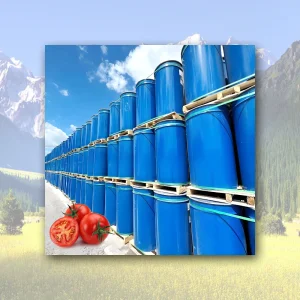
For standard ocean freight, a 20-foot dry container can accommodate 80 steel drums of tomato paste, arranged on wooden pallets (4 drums per pallet, 20 pallets total). This configuration equals a net weight of approximately 19.2 to 20 metric tons of product per shipment, maximizing payload efficiency.
Bostwick viscosity measures the distance the paste flows under its own weight in a given time frame. In Hot Break (HB) tomato paste, the inactivation of natural pectinase enzymes maintains long-chain pectins, resulting in a thick, stable structure. In contrast, Cold Break (CB) tomato paste allows natural enzyme action to break down pectin, yielding a fluid paste ideal for juice reconstitution and high-flow filling machines.
Under ambient storage conditions (optimally 15°C to 25°C), industrial aseptic tomato paste in drums maintains a commercial shelf life of 24 months. Once the aseptic seal is broken, the product must be refrigerated and processed within 24 to 48 hours to prevent mold and bacterial growth.
We implement a field-level management program where every plot undergoes a three-year conversion process free from chemical exposure. Field books document every seed batch, organic compost application, and mechanical weeding step. Annual audits by internationally recognized certification agencies (KIWA, BCS, Ecocert) verify crop authenticity for both USDA NOP and EU Organic markets.
We offer standard industry trading options, including FOB (Free on Board) at main Chinese ports (Tianjin/Qingdao), CIF (Cost, Insurance, and Freight), and CFR. Payment terms are typically structured around irrevocable L/C (Letter of Credit) at sight or T/T (Telegraphic Transfer) with deposit, depending on order size and contract history.
 Abiding Food